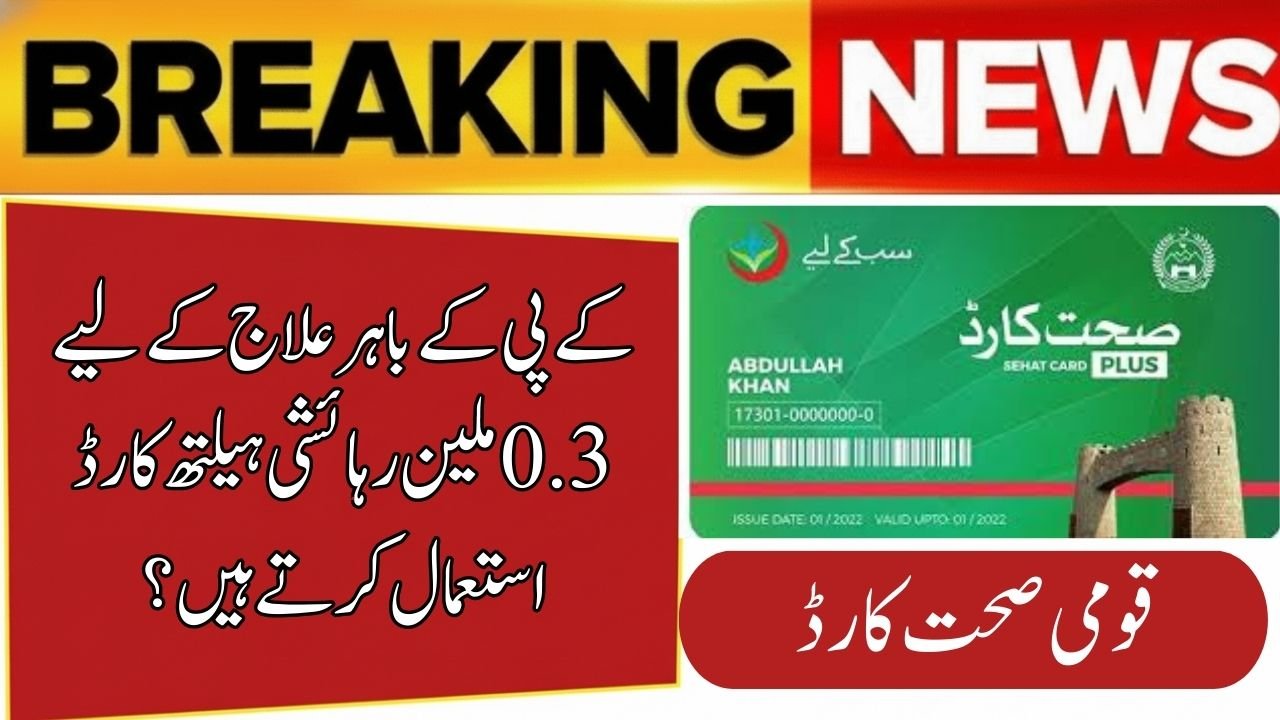
Residents use health card for treatment outside KP
More than 0.3m residents use health card for treatment outside KP, showing the growing trust in Pakistan’s largest public health insurance programme. Official documents reveal that hundreds of thousands of Khyber Pakhtunkhwa (KP) residents received free medical care in other provinces under Sehat Card Plus. This nationwide access has reduced financial pressure on families and improved healthcare outcomes for serious illnesses.
| Key Detail | Information |
|---|---|
| Programme Name | Sehat Card Plus (SCP) |
| Total Beneficiaries | Over 5 million people |
| Total Treatment Cost | Rs150 billion |
| Residents Treated Outside KP | Around 300,000 |
| Empanelled Hospitals | 700+ nationwide |
| Annual Family Coverage | Up to Rs1 million |
| Provinces Covered | Punjab, Sindh, Balochistan, ICT |
| Executing Agency | State Life Insurance Corporation |
Understanding Why 0.3m Residents Use Health Card for Treatment Outside KP
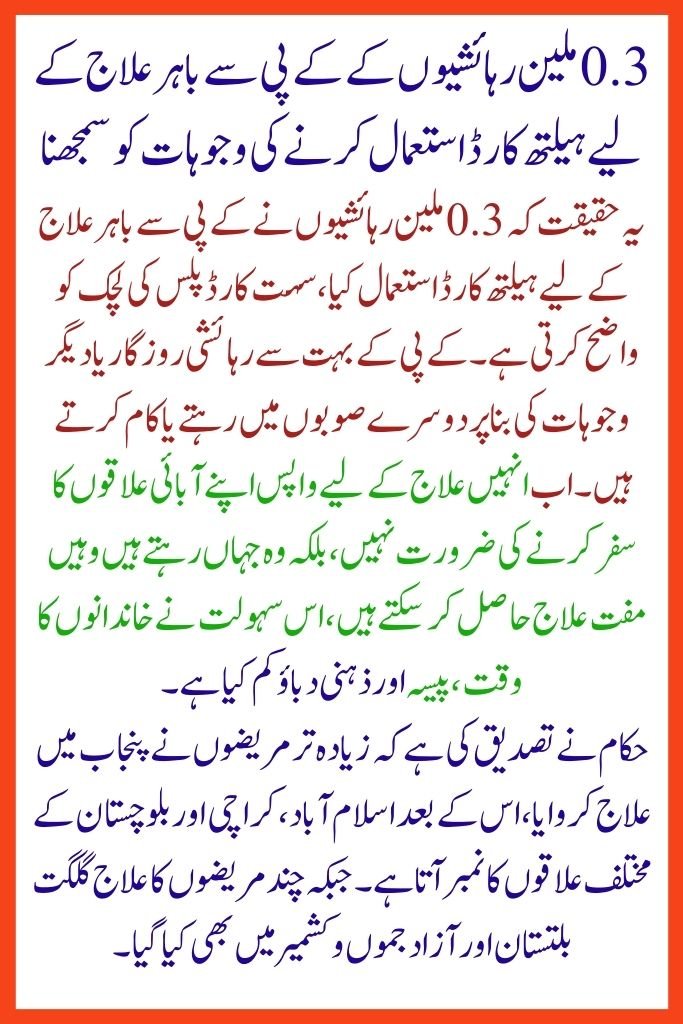
The fact that 0.3m residents use health card for treatment outside KP highlights the flexibility of Sehat Card Plus. Many KP residents live or work in other provinces. Instead of traveling back home, they can now receive free treatment where they live. According to information from the official website and top 10 Google sources, this change has saved time, money, and emotional stress for families.
Officials confirm that most patients sought treatment in Punjab, followed by Islamabad, Karachi, and parts of Balochistan. A small number were also treated in Gilgit-Baltistan and Azad Jammu and Kashmir.
Nationwide Hospital Network Under Sehat Card Plus0.3m residents use health card for treatment outside KP
Sehat Card Plus has expanded far beyond provincial borders. KP identity card holders can access services in more than 700 empanelled hospitals across Pakistan. This expansion began in 2020 when the programme became popular and demand increased.
Key benefits of the hospital network include access to specialized care not available locally and continuity of treatment for residents working outside KP.
Also Read ;EOBI Pension Update 2026
Major Treatments Covered Outside the Province 0.3m residents use health card for treatment outside KP
The programme does not only cover routine care. It also supports advanced and life-saving procedures. The KP government paid around Rs1.229 billion to hospitals outside the province for these treatments.
Covered procedures include:
- Cardiac care: Heart surgeries and interventions at top hospitals
- General surgery: Common and complex surgical procedures
- Oncology services: Cancer diagnosis and treatment
- Neurological care: Brain and spine-related treatments
High-Cost Transplants Made Possible
One of the most impactful aspects of Sehat Card Plus is transplant coverage. Officials say many residents went outside KP because certain facilities were not available locally.
Here are some key transplant details:
- Renal transplants: 235 patients treated at Rs1.9 million per case
- Liver transplants: 80 patients treated at Rs6.2 million per case
- Cochlear implants: 71 patients treated at Rs2.3 million per case
- Specialized follow-up: Included under the programme
These numbers clearly show how 0.3m residents use health card for treatment outside KP for critical and costly procedures.
Step-by-Step: How Residents Use the Health Card Outside KP
Below is a simple step-by-step process explaining how patients use Sehat Card Plus nationwide:
- Verify CNIC eligibility under Sehat Card Plus
- Visit any empanelled hospital in Pakistan
- Present KP-issued CNIC at hospital desk
- Hospital confirms eligibility with SLIC
- Patient receives cashless treatment
This process is the same across all provinces, making access easier for patients.
Women and Disease Patterns Among Beneficiaries
Official data shows that 54% of beneficiaries are women. This reflects improved access to healthcare for women who often delay treatment due to costs.
Most commonly treated conditions include:
- Cardiac diseases: Leading cause of hospitalisation
- Gynaecological care: Maternal and women’s health services
- Orthopaedic issues: Bone and joint treatments
- Urological problems: Kidney and urinary conditions
Helpline & Contact Information
For guidance and complaints, beneficiaries can contact official support channels. Information is taken from the official website https://sehatsahulat.com.pk/empaneled-hospitals/ and verified
- Sehat Card Plus Helpline: 0800-89898
- State Life Insurance Corporation (SLIC): Available nationwide
- Hospital help desks: Present at all empanelled hospitals
- Complaint resolution: Through SLIC regional offices
Financial Impact on KP Government
The KP government spends around Rs37 billion annually on Sehat Card Plus. This includes Rs28 billion for settled districts and Rs9 billion for merged tribal districts. Despite high costs, officials say the programme has reduced poverty-linked health crises and out-of-pocket expenses.
Conclusion
The fact that 0.3m residents use health card for treatment outside KP proves the success of Sehat Card Plus as a nationwide healthcare solution. By allowing treatment anywhere in Pakistan, the programme supports workers, overseas residents, and patients needing advanced care. With continued expansion and transparency, Sehat Card Plus remains a model for public health insurance in the country.
FAQs
What does it mean that 0.3m residents use health card for treatment outside KP?
It means around 300,000 KP residents received free treatment in other provinces using Sehat Card Plus.
Is treatment outside KP completely free?
Yes, eligible patients receive cashless treatment within the annual limit of Rs1 million per family.
Can KP residents use Sehat Card in private hospitals?
Yes, as long as the private hospital is empanelled under Sehat Card Plus.
Who manages the Sehat Card Plus programme?
The programme is executed by the State Life Insurance Corporation in coordination with the KP government.
Related Posts